
Post Monsoon Plumbing Inspection Checklist for Indian Homes
Use this post monsoon plumbing inspection checklist to check leaks, drains, water pressure, toilets, pipes, tanks and bathroom plumbing after heavy rain.
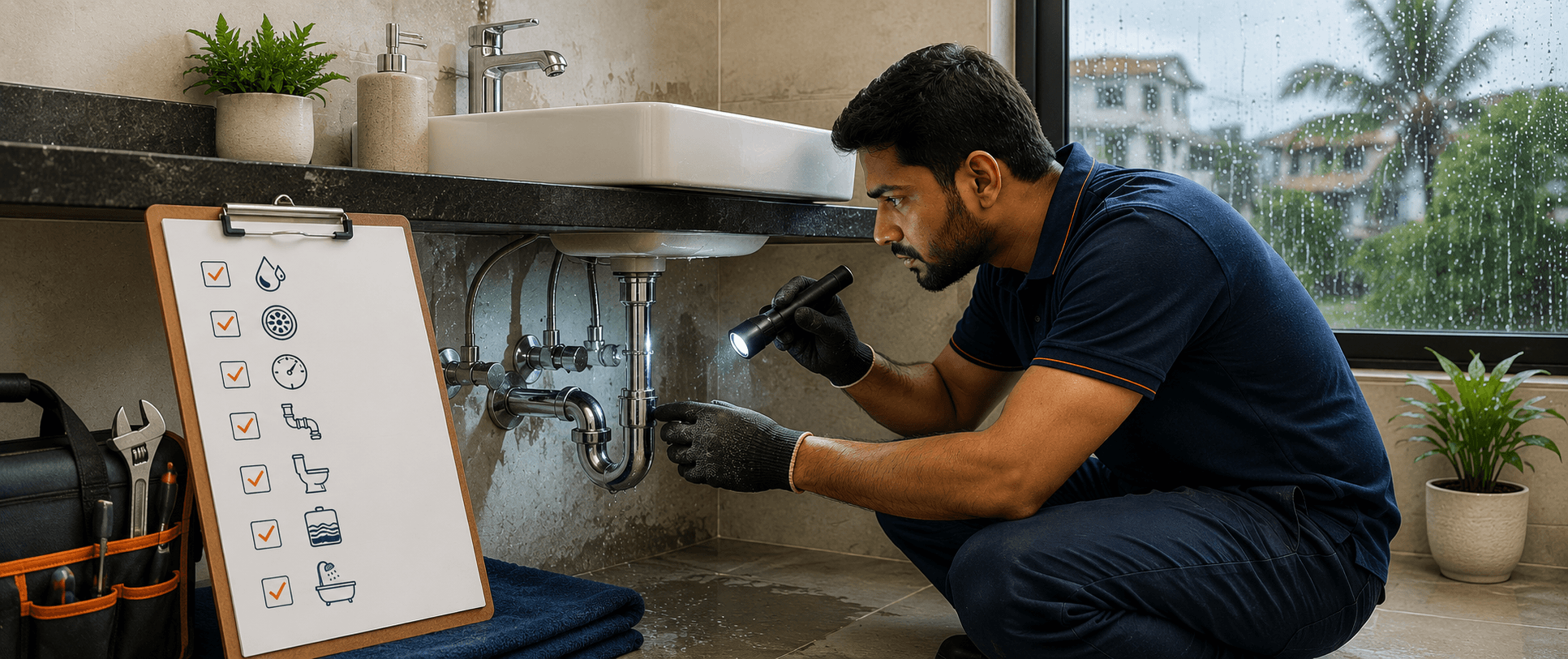
Post Monsoon Plumbing Inspection Checklist for Indian Homes
The monsoon may be over. The damage it leaves behind can continue quietly inside your home. Heavy rain, moisture, blocked drains, water pressure changes damp walls and hidden leaks can all affect your plumbing system long after the weather improves. A proper post monsoon plumbing inspection helps identify problems before they turn into expensive repairs. For homeowners, apartments, offices and commercial properties this is one of the times to check pipes, drains, bathrooms, toilets and water supply lines.
Why Post Monsoon Plumbing Inspection Matters
During the season plumbing systems often deal with: • Excess surface water • Increased drain pressure • Mud and debris entering drains • walls and ceilings • Hidden pipe leakage • Water contamination risks • Overflowing drainage lines Some problems show up right away but others may not appear until weeks later. You might notice paint that is peeling, smells, low water pressure or drain blockages that keep happening again and again A good plumbing inspection after the monsoon can find these problems early and stop damage, from occurring.
1. Check for Hidden Water Leaks
Begin by looking at walls, ceilings, the corners of bathrooms and spots near sinks.
Look for:
• Damp patches • paint • Discoloured walls • Musty smells • Water stains • Unexplained moisture • Dripping sounds If a place appears dry but the signs keep coming a hidden pipe leak might be behind the wall. If the problem is serious think about hiring water leak repair services. You can also read our guide about hidden plumbing leaks.
2. Inspect Bathroom and Kitchen Drains
Monsoon rain can carry dirt, grit and waste into drainage systems.
Check whether:
• Water is running out • Unpleasant odors are coming from the drains • There are gurgling sounds • Water is backing up • Multiple drains are running slowly If the same drain is stopping you from getting rid of water even when you clean it, there is a bigger problem in the pipe.
3. Check Water Pressure
After the monsoon changes in water pressure might show a pipe blockage, mineral buildup, closed valves a leak problems with the tank or damaged supply lines. Try testing taps. If only one tap is faulty it maybe a local problem but if there are several taps that are under pressure this could point to a more general problem with your entire plumbing system.
4. Check The Toilets for Running or Leak
Running toilets can waste amounts of clean water.
Look for: • Water running into the bowl • Bubbling or hissing sounds • The toilet flushing by itself • Wetness around the toilet • Tanks that are constantly running. These are signs that the flush valves have worn parts and other plumbing problems For repeated toilet or bathroom problems Gigwell offers plumbing services.
5. Check Exposed and Concealed Pipes
Look at pipes under sinks, near toilets, around water heaters and in utility rooms.
Watch, for:
• Rust • Corrosion • Cracks • joints • Loose fittings • pipe surfaces • Unusual pipe noises Moisture can speed up rust especially in old systems. If a pipe leaks again or looks damaged you might need pipe repair.
6. Check Overhead Water Tank and Supply Lines
Following rainfall, check overhead water tank and its supply lines for the following:
Check:
• Leakage of • water • supply lines and fittings. • Overflow • Cracks • Damaged tank covers An open tank may allow entry of insects, dirt and rainwater into the supply. Make sure that the tank is properly sealed and the area drained by the tank is kept clean.
7. Check Bathroom Seals and Fixtures
Moisture can ruin the sealants, around bathroom fixtures.
Inspect:
• Wash basin joints • Toilet base • Shower fittings • Water mixers • Taps • Tile joints • Pipe entry points Replace old sealant to prevent ingress of water. Report any leaks which may cause dampness or lift tiles.
8. Check for Bad Drain Smells
drain odours after monsoon can indicate: • Blocked drain pipes • Dry floor traps • Waste buildup • Poor ventilation • Sewage backup • Drainage system problems If cleaning the visible drain does not remove the smell the problem may require professional inspection. Bad smells combined with drainage should not be ignored.
9. Inspect Areas Around Geysers and Water Heaters
Water heaters and geysers are connected to pressure and supply lines that may develop leakage.
Check for:
• Water around the unit • Rust • Dripping valves • Loose connections • Reduced hot water pressure If water appears near components switch off the unit and seek professional help.
10. Monitor Your Water Usage
An increase in water usage can be one of the easiest signs of a hidden plumbing issue. Compare your water consumption after the monsoon.
If usage rises without any change in household activity check for: • Running toilets • Leaking taps • Hidden pipe leaks • Tank overflow • Underground leakage
Post Monsoon Plumbing Checklist
Use this checklist:
• Check walls and ceilings for dampness • Test all drains • Inspect water pressure • Check toilet flushing • Inspect taps and mixers • Look for pipe corrosion • Check the overhead tank • Inspect bathroom seals • Watch for drain odours • Check geyser connections • Monitor water consumption • Repair small leaks early •
Common Mistakes to Avoid
Do not:
• Paint over damp walls without fixing the leak • Ignore slow drains • Use excessive chemical drain cleaners • Delay small pipe repairs • Ignore recurring toilet problems • Assume post monsoon dampness will disappear automatically Temporary fixes may hide the symptoms without solving the plumbing problem.
When Should You Call a Professional Plumber?
Professional help's recommended if you notice:
• Recurring drain blockages • Hidden water leakage • Major pressure changes • Sewage smells • Damaged pipes • Water leaking into walls • Multiple plumbing problems at the time Gigwell provides professional plumbing services for residential and commercial properties, including drain cleaning, pipe repair, water leak repair, bathroom plumbing and emergency plumbing support.
Asked Questions
When should I inspect my plumbing after monsoon?
A basic inspection is useful soon as the heavy rains begin to reduce especially if you noticed drainage, leakage or dampness during the season. Why do drains block often after monsoon? Rainwater can carry mud, debris, leaves and waste into drainage systems increasing the risk of complete blockage.
Can damp walls indicate a plumbing leak?
Yes. Damp walls may be caused by rainwater. Repeated or localized damp spots, on walls can also indicate hidden plumbing leakage.
Should I call a plumber even if the leak is small?
If the leak keeps returning is. Affects walls and flooring professional inspection is recommended. A post monsoon plumbing inspection can prevent drainage, leakage and pipe problems from becoming expensive repairs. Checking drains, water pressure, toilets, pipes, tanks and bathroom fixtures gives you a picture of your home’s plumbing condition after heavy rain. The best approach is simple: identify signs early fix minor problems quickly and call a professional when the issue keeps returning. For plumbing support explore Gigwell Services for plumbing repair and home maintenance solutions, in Morbi.
Need a plumber or bathroom upgrade in Morbi?
Contact Gigwell